
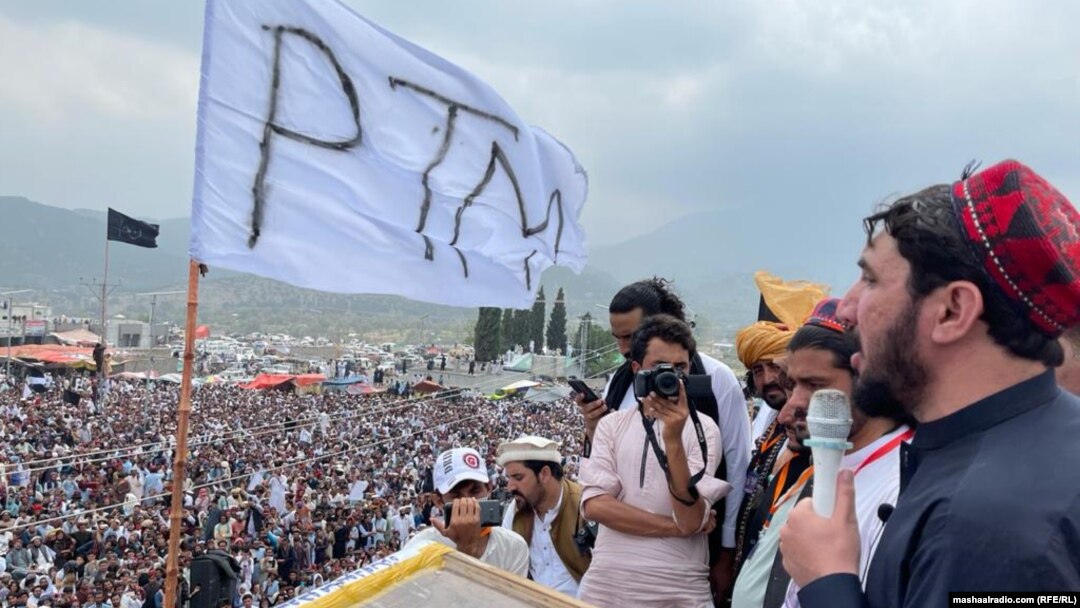
In a significant development regarding civil rights in Pakistan, human rights advocates are urging the government to immediately revoke the ban on the Pashtun Tahaffuz Movement (PTM), a group advocating for the rights and dignity of the Pashtun people. The PTM, founded in 2017, has gained traction for its peaceful protests against human rights abuses and discrimination faced by Pashtuns, particularly in Khyber Pakhtunkhwa and tribal areas.
Authorities imposed a ban on the movement earlier this year, citing concerns over national security and public order. Critics, however, argue that the ban stifles legitimate dissent and undermines the fundamental rights of freedom of expression and assembly. International human rights organizations, including Amnesty International and Human Rights Watch, have condemned the ban, calling it an infringement on civil liberties.
“The PTM is a peaceful movement that seeks justice and recognition for marginalized communities,” stated a representative from Amnesty International. “Banning it not only violates the rights of its members but also silences a vital discourse about the socio-political issues faced by the Pashtun people.”
Supporters of the PTM argue that the movement has highlighted critical issues such as extrajudicial killings, enforced disappearances, and socio-economic disparities. Its peaceful protests and demands for accountability have resonated with many, bringing attention to the long-standing grievances of the Pashtun community.
In recent weeks, protests have erupted across major cities in Pakistan, with demonstrators calling for the restoration of the PTM’s activities. These protests reflect growing discontent with government policies and the suppression of voices advocating for human rights.
The PTM’s leaders have expressed their commitment to peaceful activism and dialogue with the government. “We are not against the state; we are for our rights and dignity. Our movement is based on peace and dialogue,” said Manzoor Pashteen, the prominent leader of the PTM.
As the situation unfolds, the call for the immediate revocation of the ban continues to grow louder. Human rights defenders emphasize that allowing the PTM to operate freely is essential for fostering a culture of tolerance and respect for diverse voices within Pakistan.
In the face of rising tensions and a complex socio-political landscape, the government now stands at a crossroads: to uphold its commitment to human rights and democracy by lifting the ban on the PTM, or to further alienate a significant segment of the population. The eyes of the nation and the international community are on Pakistan as it navigates this crucial juncture in its democratic journey.
Data-Engineer-Associate NSE7_OTS-7.2 AD0-E123 1Z0-076 POPM Marketing-Cloud-Intelligence P_SAPEA_2023 Advanced-Field-Service Identity-and-Access-Management-Architect NCIDQ SAFe-Practitioner SAFe-Agilist SPC Odoo-v16 SSM 1Z0-770 AD0-E329 dbt-Analytics-Engineering PRINCE2-Foundation MSP-Practitioner MB-820 Dynatrace-Associate 1Z0-915-1 1Z0-106 1Z0-1108-2 1Z0-071 Odoo-v17 C_ABAPD_2309 Marketing-Associate AD0-E124 CWNA-109 CLF-C02 AD0-E722 AD0-E126 700-826 CCAK AD0-E712 MTCRE 200-301 Energy-and-Utilities-Cloud JSE-40-01 ACP-620 3V0-41.22 1Z0-149 Data-Cloud-Consultant NS0-163 H13-311_V3.5 AD0-E212 C_TS452_2022 700-240 CMRP 500-420 NSE7_EFW-7.2 BAPv5 DOP-C02 D-VXR-OE-23 FOCP 1Z0-078 C_SEN_2305 AD0-E717 API-570 CTPRP 71301X HCL-BF-PRO-10 L2M3 GitHub-Advanced-Security IIBA-CCA HPE7-A07 Desktop-Specialist GR4 The Types of business